Posts

Image
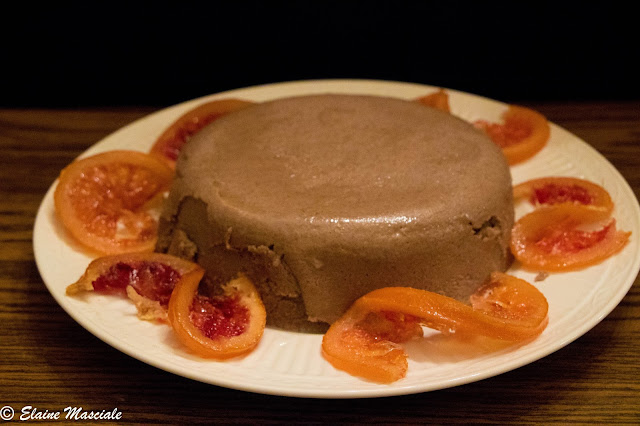
Chocolate Cream Historical Food Fortnightly Challenge #2 - Culinary Vices! The Challenge :   Culinary Vices (January 15 - January 28)   Some foods are really, really naughty. Globs of butter, lashings of sugar and syrup, decadent chocolate and wine. Bring out your naughty, indecorous side with foods associated with all the bad things, in the best ways. Being a child of the twentieth century, I know what I consider to be decadent (chocolate!  whipped cream!  rich creaminess!) and being a student of the nineteenth century, I know that my tastes do not necessarily align with theirs.  Many of their desserts are not as sweet and naturally, few rely on refrigeration - I do qualify "few," because there are desserts, such as ice cream, which require chilling. Boiled puddings there are aplenty on both shores of the Atlantic Ocean, as well as cakes like our fruit and pound cakes.   Mrs. Isabella Beeton That type of dessert didn't strike me as...

Baked Beef and Potatoes - A Historical Food Fortnightly Recipe

Image
Today, I take on another Historical Food Fortnightly Challenge (#1 of the new series) Baked Beef with white and sweet potatoes The Challenge 1. Meat-and-Potatoes    They’re a staple for the tables in the most rustic cottages as well as the fanciest banquet tables - and it’s also an idiom meaning a staple or the most basic parts of something. Make a historic “meat-and-potatoes” recipe - however you interpret it. I decided to work with the narrow, classic definition of meat as beef/veal, pork and mutton/lamb.  Game, poultry or fowl, and fish/shellfish form their own categories.  Not having to rely on seasonality of period storage options, I decided on beef - roast beef in particular.   Selection of a recipe proved harder than I expected.  Wanting to keep 1865 as my end limit, I found that many cookbooks had rather small sections on beef cookery.  Most of the ones I examined advised boiling the beef for an hour or two before transferring to th...

Lincoln's Assassination - April 15, 1865

Image
As a member of the Lincoln Funeral Coaltion, I have been working and preparing for this sesquicentennial, and especially its culmination at the burial in Springfield.  I have thought long about how I might feel on this day and what I might want to say.  And words fail me. I can rest easy in the knowledge that words also failed most of the contemporary editors.  The assassination of a President is something so horrific, so unbelievable, that one is thrown into unbelieving shock.  Many editors across the North, overwhelmed by their emotions, kept their columns very short and terse.  In an era when tears are considered unmanly, they publicly confessed their own tearful reactions. It is easy to talk about the public reactions, the sermons, the mourning decorations,and the mournful journey of the funeral train, but it is hard to capture that moment of grief, when it feels as if the floor has fallen out beneath you, when blackness seems to o...

Molasses Jumbles

Image
When looking through historic foodways and cookbooks to plan menus, I find it hard to reconcile my love of cookies with my desire to  incorporate historic accuracy. Sadly. cookies don't figure as importantly as they do today.  Cakes, yes, although they tend to be more solid and dense, like pound cake and various fruit cakes.  Puddings of all types - baked and especially boiled - seem to be highly favored.  And so my problem.  I LOVE cookies!  To me it's a size-limited sweet that is easy to transport and easy to eat - and best of all, no dishes to wash when you eat them! I have made Shrewsbury cakes, gingerbread of varying types, and am always on the lookout for a new cookie recipe.  So, when my friend Betsy had posted about her successful attempt at making common jumbles. I was very excited.  They proved popular with my family and friends and are now one of my go-to recipes.  A wonderful cookie to take to reenactments (and to eat at home)...

Crab Apple Jelly

Image
The Historical Food Fortnightly Challenge #8 "It’s harvest time in the northern hemisphere, and springtime in the southern hemisphere. Make something either to preserve that produce that you’re harvesting, or replenish your supply after the winter! Fruit and vegetable jams, jellies, and preserves are the focus!" Northern Illinois in late August and early September has seen some sudden rainstorms with very strong winds  During one of these storms, the crab apple tree in front of our church building was toppled.  While accompanying my husband, who is the congregational president, to look at the damage, I noticed the crab apples had ripened to a brilliant glossy red. I had toyed with the idea of making a historic preserve with crab apples for a long time but it kept getting pushed to the back of my "to do" list.  All of a sudden, it was now or never.  The organic supplies were lying on the ground in front of me in easy reach (our congregation does not spray th...

A Dish of Sliced Tomatoes

Image
It's August - and that most seasonable of vegetables is ripening - tomatoes! How utterly perfect, because the current challenge for the Historical Food Fortnightly is Seasonal Fruits/Vegetables.   The challenge: concoct a dish based on the fruits and/or vegetables that would have been in season and available to the particular time you wish to interpret. It needn’t be the place you are in at this moment, but it should coincide with the season! I selected "Tomatoes Sliced with Onions," which can be found on  p 49 of Elizabeth Lea's book  Domestic Cookery, Useful Receipts, and Hints to Young Housekeepers  (10th edition), published in 1859 in Maryland. This simple recipe makes a lovely summer salad that highlights the tomatoes.                                        Tomatoes Sliced with Onions               ...

Historic Vinegar Pie, oh my!

Image
Vinegar pie sound like a contradiction in terms.  A pie based around vinegar?  For the Historical Food Fortnightly Challenge #5 (Pies), I decided to explore vinegar pie in the 1860's. I had had some vinegar pie at the Eagle Tavern in Greenfield Village this May.  The pie was delightful - light and lemony.  The technique seems similar to that of Key Lime pie, in which the acid "cooks" the raw eggs.  There was only one problem:  as I combed through mid-nineteenth century cookbooks, I could not find a recipe for vinegar pie.  Except for one.  And it didn't sound like it would turn out the way I was hoping, since there were no eggs included.  But there was one recipe!  That meant the challenge was on! The recipe I found came from The Practical Housekeeper and Young Woman's Friend by Mrs. M. L. Scott (Toledo. 1855)    Like most period recipes, the instructions were minimal, assuming a familiarity with the necessary...