Posts

Showing posts with the label antebellum

New Year's Cake

Image
The New Year!  A time for fresh starts!  And, speaking of fresh starts, to my great delight I discovered that The Historical Food Fortnightly Challenge has been revived.  Having a prompt and a challenge not only keeps you on your toes but it makes cooking historic food even more pleasurable. The Challenge:  One Last Hurrah.  Pick a holiday, any holiday, and start the New Year with some in- or out-of-season merriment. I decided to attempt New Year's Cake.  New Year's Day was a day of festivity and social visits.  The normal pattern seemed to be that the women stayed home to receive callers and well-wishers throughout the day while the men circulated from house to house.  Each hostess would give her callers some type of refreshment.  In the middle Atlantic states, particularly those of Dutch origin, the traditional pastry was New Year's Cake, but not a cake such as we think of.  New Year's cakes of this type are actual...

Historic Peach Jam (AND Apricot Jam)!

Image
Peach jam on homemade bread! As summer wound into autumn, I found some end-of-season stone fruit at my local grocery store - peaches and apricots available for a song!   A bit bruised and battered, they were for sale on the produce clearance rack, and, as such, were perfect for making jam.  I made some of each type, but the photos shown are of the peach jam (bet you couldn't tell!). The Recipe- the same for each Fruit This recipe comes from The Young Cook's Assistant and Housekeeper's Guide by  P. Masters (1841, London, The recipe is similar or identical to many others I surveyed.   Working Through the Recipe I have made jam many times, so the concept was easy to me, but let's walk through it. Weighing Ingredients Weighing may seem intimidating, but is by far the easiest way to make this jam.  I purchased an inexpensive digital scale from Harbor Freight, that allow you to weigh in ounces, grams, and pounds. Fruit W...

A Delicate Butter Cookie

Image
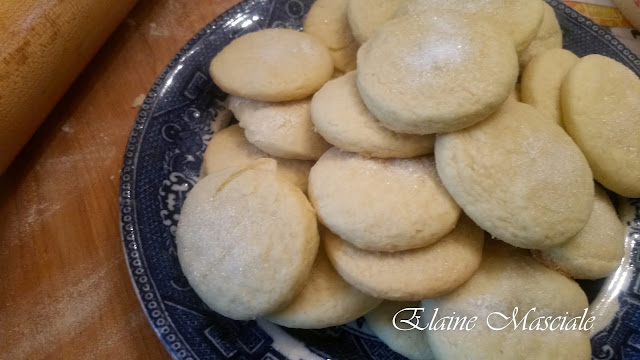
I thought I would try another cookie this week.  I was drawn to this recipe because it had sugar sprinkled on top, which seems like a very contemporary touch.  Because there is no flavoring extract, the cookie flavor is delicate, tasting primarily of butter and sugar. The Recipe This recipe comes from The Genesee Farmer , Vol XX, February 1859. The Ingredients The first ingredients on the list are pretty straight forward - a cup of butter, 2 cups of sugar, 4 eggs.  I set the butter and eggs out to come to room temperature. The sour milk - per standard substitution, I made my own sour milk.  I measured 1  2/3 T of milk into a glass and added 1 t of lemon juice.  I stirred the milk and lemon juice together and let them sit for roughly 5 minutes.   Saleratus is a leavening agent that both precedes and is concurrent with baking soda. I used a 1 to 1 substitution and used 1 t of baking soda. Flour.  You will notic...

No.1 Ginger Snaps

Image
Ginger was one of the most popular flavors for baked goods in the 19-century. Recipes for gingerbread and ginger cookies abound.  This recipe for "No. 1 Ginger Snaps" is a lovely example. The Recipe Add caption This recipe comes from  The Practical Cookbook , by Mrs. Bliss (Philadelphia, 1860),  The recipe is titled "Number 1" simply because it is immediately followed by Number 2 Ginger Snaps, Sources and Differences The Southern Gardener and Receipt Boo k, third edition, by Mrs. Mary L. Edgeworth (Philadelphia, 1860) provides an identical recipe, instructing the baker to add "enough flour to make a soft dough."  The New Family Book or Ladies' Indispensable Companion and Housekeepers' Guide  (New York, 1854) and The Improved Housewife  (Hartford, Conn, 1844) also include the recipe, but with a significant difference - the instructions are "to add as much flour as can be rolled into the mixture."  The amount of...

Cup Cakes No. 1 for a Picnic

Image
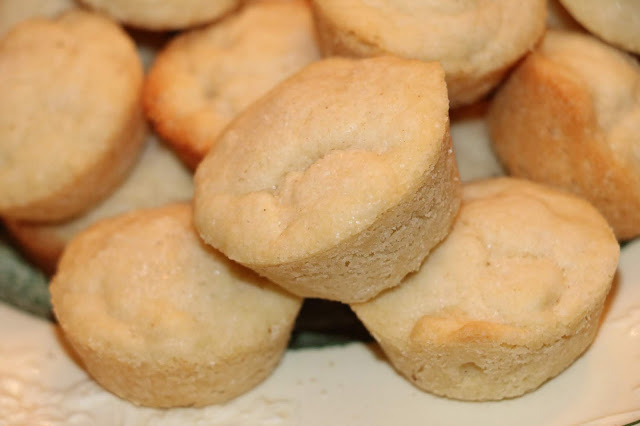
Cup Cake No. 1 We had a reenactment today here in the Chicago suburbs, and, as seems to be usual this spring, thunderstorms caused the event to cancel in the early afternoon  Rain, rain, go away! Our group had planned a period picnic for an easy fun day.  I knew I wanted to bring something easy to transport, enticing in size - just a bite! - and clean and tidy.   I settled on a Cup Cake from The New England Economical Housekeeper , by Ester A. Howland (Cincinnati, 1845). I had made this cake once before, with only fair results.  The flavor was nice, but I found it to be dry.  With advice from my friend and fellow historic food historian, Elaine Kessinger, I decided to remake it using a different technique.   The resultant cakes were tender and delicious. The Recipe The New England Economical Housekeeper The ingredients are fairly straightforward and really don't need any explanation. For flavoring, I ad...

Irish Stew

Image
Irish Stew for Saint Patrick's Day Saint Patrick's Day is approaching rapidly, along with all the foods we consider to be "traditional" for the day.  I thought it would be interesting to do some research into period (antebellum) foods and recipes for the day. Lyrics to "St Patrick Was a Gentleman"    The Every-Day and Table Book , Wm. Hone, 1835 The Recipe This recipe for Irish stew comes from Charles Francatelli, chef to Queen Victoria for four years.  One of his four published cookbooks is geared towards the working class.  He discusses ways to make frugal ways more filling (usually by adding oatmeal or bread to broth) and to help them extend to feed enough people. To my delight, he included a recipe for Irish stew. Preparation and Thoughts Thereon Let me confess upfront - this stew was a shock to my system.  I kept wanting to ADD THINGS  - ALL THE THINGS!   Where was the seasoning other than s...

Cream Cocoa-nut Pie for Pi Day!

Image
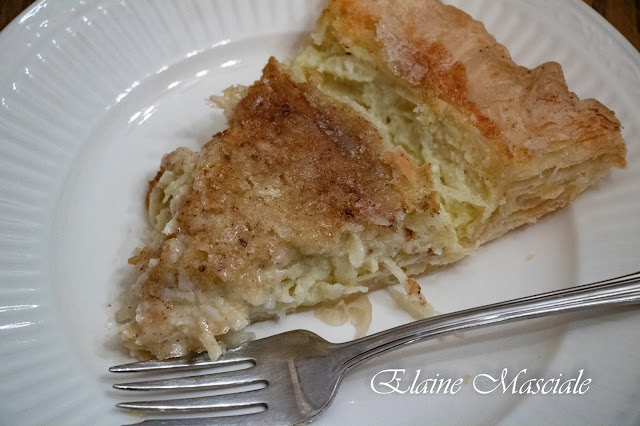
Today, March 14th,  is the whimsical "holiday" known as Pi Day.  Such a fun excuse to make a pie, as if one truly needed an excuse to so so! I was torn between two historic pies - cranberry and coca-nut.  Both are still seasonal, cranberries starting to show up less frequently in my grocery stores of choice, and coconut being something I remember only appearing in the winter when I was a child.    Because of the path of my errands, I went to a grocery that I frequent less often and that store's stock made the decision for me.  No cranberries, either fresh or frozen.  Coconut it is! I had already selected my recipe: Cream Cocoa-nut Pudding from Miss Eliza Leslie's 1854 edition of New Receipts for Cooking  (Philadelphia).   Since I planned on making this recipe as a pie, I decided to cut the quantity in half so I would wind up with only one pie.  Preparing the Coconut In this part I was ably assisted by my hus...

Candied Orange Peel

Image
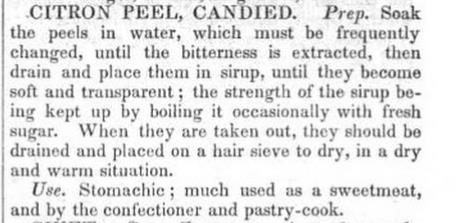
It's January and that means decreased levels of sunlight, lots of cold, and an upswing in illness across the board.  Christmas decorations are down and put away, leaving surroundings duller and grayer.  It's also peak time for citrus (this assumes you remember when fruits and vegetables were sold seasonally in the grocery stores). We have been eating a lot of oranges this winter.  I have been collecting the peels in a water-filled plastic zip top bag in our refrigerator,  When the bag reaches the desired level, it is time to make candied orange peel.  There is no hard or fast level - it totally depends upon how large a batch you want to make at a time and if you have the time free for candying. Historic Recipe Let's start with the historic recipe (A Cyclopaedia of Six Thousand Practical Receipts, Arnold James Cooley, New York, 1856) How to Make It! To actually make these, I used some modern techniques. Place the orange peels in a heavy-bottomed sa...