Posts

Showing posts with the label historic recipe

Peanut Brittle - Sorta
Image
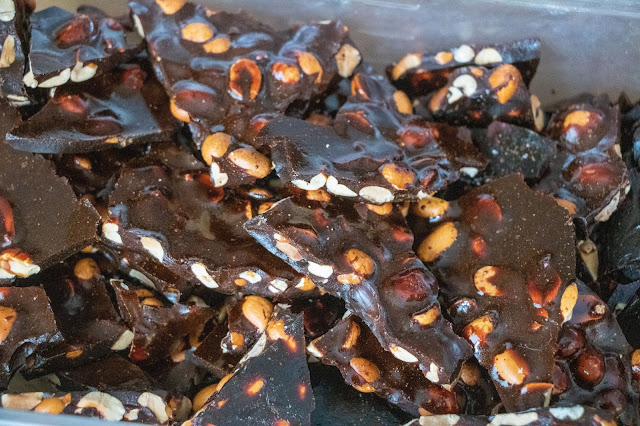
Peanut Brittle - aka Ground Nut Candy This Historical Food Fortnightly Challenge (HFF #3. 3) is The Tiffany Problem: Have you ever come across a dish that is older than you expected? That seems like it should be an anachronism, but isn't? Now's the time to give it a try. Before we start, here's some background information on the term "Tiffany Problem." According to Helen Vnuk, writing on MamaMia  (April 25, 2018) "... there’s an expression coined by the fantasy writer Jo Walton: The Tiffany Problem. It describes “the tension between historical fact and the popular perception of history”. In other words, it’s when a writer who has done painstaking research puts historically correct information into a novel, and readers complain that they’ve got it wrong, just because it looks wrong, when it’s actually right. “Tiffany is a real attested medieval name,” Walton explained in an interview with the Internet Review Of Science Fiction. “It’s a vari...

A Plain, Cheap Soup

Image
Winter is such a wonderful, satisfying time for soup!  My entry for the Historical Food Fortnightly Challenge "Downstairs Dinner" is A Plain Cheap Soup. The Challenge  Historical Food Fortnightly Challenge Season 4, Number 2:  Downstairs Dinner.  Make a dish of the working classes. The Recipe This recipe comes from The Practical Cookbook (Philadelphia, 1850) What I Did / The Method Ingredients   Leftover meat bones:  I used the carcass of a roast chicken Two large carrots, peeled and chopped Three small turnips, peeled and chopped One large yellow onion, peeled and chopped 2 whole cloves salt and pepper water Method Being used to making soup from scratch on a frequent basis, this concept felt very easy and familiar.  I placed the chicken carcass in a large pot and liberally covered it with water, then let it cook for several hours until the meat fell off the bones. At this po...

New Year's Cake

Image
The New Year!  A time for fresh starts!  And, speaking of fresh starts, to my great delight I discovered that The Historical Food Fortnightly Challenge has been revived.  Having a prompt and a challenge not only keeps you on your toes but it makes cooking historic food even more pleasurable. The Challenge:  One Last Hurrah.  Pick a holiday, any holiday, and start the New Year with some in- or out-of-season merriment. I decided to attempt New Year's Cake.  New Year's Day was a day of festivity and social visits.  The normal pattern seemed to be that the women stayed home to receive callers and well-wishers throughout the day while the men circulated from house to house.  Each hostess would give her callers some type of refreshment.  In the middle Atlantic states, particularly those of Dutch origin, the traditional pastry was New Year's Cake, but not a cake such as we think of.  New Year's cakes of this type are actual...

Historic Peach Jam (AND Apricot Jam)!

Image
Peach jam on homemade bread! As summer wound into autumn, I found some end-of-season stone fruit at my local grocery store - peaches and apricots available for a song!   A bit bruised and battered, they were for sale on the produce clearance rack, and, as such, were perfect for making jam.  I made some of each type, but the photos shown are of the peach jam (bet you couldn't tell!). The Recipe- the same for each Fruit This recipe comes from The Young Cook's Assistant and Housekeeper's Guide by  P. Masters (1841, London, The recipe is similar or identical to many others I surveyed.   Working Through the Recipe I have made jam many times, so the concept was easy to me, but let's walk through it. Weighing Ingredients Weighing may seem intimidating, but is by far the easiest way to make this jam.  I purchased an inexpensive digital scale from Harbor Freight, that allow you to weigh in ounces, grams, and pounds. Fruit W...

Candied Ginger from 1793

Image
Many apologies for the amount of elapsed time since my last post!  It has been a busy, exciting summer.  Let's start current and work our way backward, shall we? Today's endeavor is Candied Ginger, from The Housekeeper's Instructor by William Henderson (sixth edition, 1793, London, W. and J. Stratford, Printers). Candied ginger, or more accurately, ginger candy.   I struggled quite a bit with this recipe, but I think I finally have it worked out. A SIDE NOTE ON GINGER Ginger, from Medical  Botany,   R. Griffith, MD; 1847 Philadelphia Then, as now, people were aware of the medicinal qualities of ginger.  If you ever drank ginger ale to calm an upset stomach, you are drawing on ginger's long-proven ability to calm digestive issues.  People also enjoyed candied ginger as a sweetmeat. THE RECIPE The ingredients are simple enough: Webster's American Dictionary of the English Language (1828 edition) defines "ra...

A Delicate Butter Cookie

Image
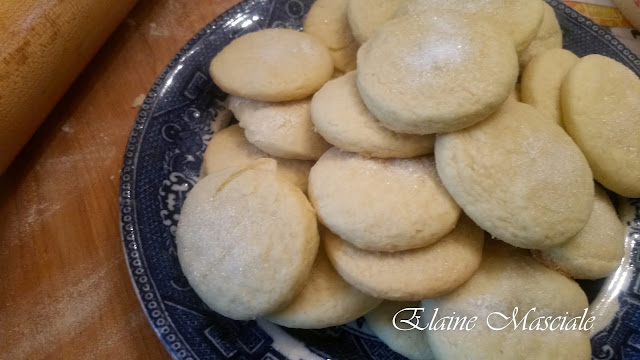
I thought I would try another cookie this week.  I was drawn to this recipe because it had sugar sprinkled on top, which seems like a very contemporary touch.  Because there is no flavoring extract, the cookie flavor is delicate, tasting primarily of butter and sugar. The Recipe This recipe comes from The Genesee Farmer , Vol XX, February 1859. The Ingredients The first ingredients on the list are pretty straight forward - a cup of butter, 2 cups of sugar, 4 eggs.  I set the butter and eggs out to come to room temperature. The sour milk - per standard substitution, I made my own sour milk.  I measured 1  2/3 T of milk into a glass and added 1 t of lemon juice.  I stirred the milk and lemon juice together and let them sit for roughly 5 minutes.   Saleratus is a leavening agent that both precedes and is concurrent with baking soda. I used a 1 to 1 substitution and used 1 t of baking soda. Flour.  You will notic...

No.1 Ginger Snaps

Image
Ginger was one of the most popular flavors for baked goods in the 19-century. Recipes for gingerbread and ginger cookies abound.  This recipe for "No. 1 Ginger Snaps" is a lovely example. The Recipe Add caption This recipe comes from  The Practical Cookbook , by Mrs. Bliss (Philadelphia, 1860),  The recipe is titled "Number 1" simply because it is immediately followed by Number 2 Ginger Snaps, Sources and Differences The Southern Gardener and Receipt Boo k, third edition, by Mrs. Mary L. Edgeworth (Philadelphia, 1860) provides an identical recipe, instructing the baker to add "enough flour to make a soft dough."  The New Family Book or Ladies' Indispensable Companion and Housekeepers' Guide  (New York, 1854) and The Improved Housewife  (Hartford, Conn, 1844) also include the recipe, but with a significant difference - the instructions are "to add as much flour as can be rolled into the mixture."  The amount of...

Cup Cakes No. 1 for a Picnic

Image
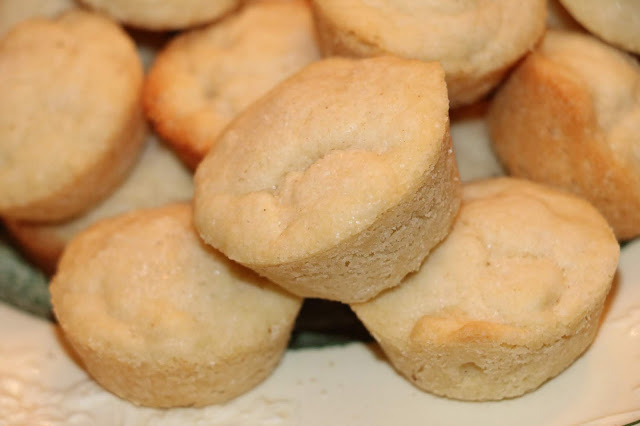
Cup Cake No. 1 We had a reenactment today here in the Chicago suburbs, and, as seems to be usual this spring, thunderstorms caused the event to cancel in the early afternoon  Rain, rain, go away! Our group had planned a period picnic for an easy fun day.  I knew I wanted to bring something easy to transport, enticing in size - just a bite! - and clean and tidy.   I settled on a Cup Cake from The New England Economical Housekeeper , by Ester A. Howland (Cincinnati, 1845). I had made this cake once before, with only fair results.  The flavor was nice, but I found it to be dry.  With advice from my friend and fellow historic food historian, Elaine Kessinger, I decided to remake it using a different technique.   The resultant cakes were tender and delicious. The Recipe The New England Economical Housekeeper The ingredients are fairly straightforward and really don't need any explanation. For flavoring, I ad...